AI Chat Perchance

AI Chat Perchance — independent reviews, comparisons, pricing and step-by-step guides on Aizhi.

  • Data event

    Data event

    A data event is a relevant state transition defined in an event schema. Typically, event schemata are described by pre- and post condition for a single or a set of data items. In contrast to ECA (Event condition action), which considers an event to be a signal, the data event not only refers to the change (signal), but describes specific state transitions, which are referred to in ECA as conditions. Considering data events as relevant data item state transitions allows defining complex event-reaction schemata for a database. Defining data event schemata for relational databases is limited to attribute and instance events. Object-oriented databases also support collection properties, which allows defining changes in collections as data events, too.

    Read more →
  • List of video editing software

    List of video editing software

    The following is a list of video editing software. The criterion for inclusion in this list is the ability to perform non-linear video editing. Most modern transcoding software supports transcoding a portion of a video clip, which would count as cropping and trimming. However, items in this article have one of the following conditions: Can perform other non-linear video editing function such as montage or compositing Can do the trimming or cropping without transcoding == Free (libre) or open-source == The software listed in this section is either free software or open source, and may or may not be commercial. === Active and stable === === Inactive === == Proprietary (non-commercial) == The software listed in this section is proprietary, and freeware or freemium. === Active === === Discontinued === == Proprietary (commercial) == The software listed in this section is proprietary and commercial. === Active === === Discontinued ===

    Read more →
  • G'MIC

    G'MIC

    G'MIC (GREYC's Magic for Image Computing) is a free and open-source framework for image processing. It defines a script language that allows the creation of complex macros. Originally usable only through a command line interface, it is currently mostly popular as a GIMP plugin, and is also included in Krita. G'MIC is dual-licensed under CECILL-2.1 or CECILL-C. == Features == G'MIC's graphical interface is notable for its noise removal filters, which came from an earlier project called GREYCstoration by the same authors. G'MIC offers many built-in commands for image processing, including basic mathematical manipulations, look up tables, and filtering operations. More complex macros and pipelines built out of those commands are defined in its library files. == Interpreters == === Command line === G'MIC is primarily a script language callable from a shell. For example, to display an image: This command displays the image contained in the file image.jpg and allows zooming in to examine values. Several filters can be applied in succession. For example, to crop and resize an image: === Graphical interface === G'MIC comes with a Qt-based graphical interface, which may be integrated as a Gimp or Krita plugin. It contains several hundred filters written in the G'MIC language, dynamically updated through an internet feed. The interface provides a preview and setting sliders for each filter. G'MIC is one of the most popular Gimp plugins. === G'MIC Online === Most of the filters available for the graphical interface are also available online. === ZArt === ZArt is a graphical interface for real-time manipulation of webcam images. === libgmic === Libgmic is a C++ library that can be linked to third-party applications. It sees integration in Flowblade and Veejay.

    Read more →
  • Jaggies

    Jaggies

    Jaggies are visual artifacts in raster images, most frequently from aliasing, which in turn is often caused by non-linear mixing effects producing high-frequency components, or missing or poor anti-aliasing filtering prior to sampling. Jaggies are stair-like lines that appear where there should be "smooth" straight lines or curves. For example, when a nominally straight, un-aliased line steps across one pixel either horizontally or vertically, a "dogleg" occurs halfway through the line, where it crosses the threshold from one pixel to the other. Jaggies should not be confused with most compression artifacts, which are a different phenomenon. == Causes == Jaggies occur due to the "staircase effect". This is because a line represented in raster mode is approximated by a sequence of pixels. Jaggies can occur for a variety of reasons, the most common being that the output device (display monitor or printer) does not have sufficient resolution to portray a smooth line. In addition, jaggies often occur when a bit-mapped image is scaled to a higher resolution. This is one of the advantages that vector graphics have over bitmapped graphics – a vector image can be losslessly scaled to any arbitrary resolution or stretched infinitely in either axis without introducing jaggies. == Solutions == The effect of jaggies can be reduced by a graphics technique known as spatial anti-aliasing. Anti-aliasing smooths out jagged lines by surrounding them with transparent pixels to simulate the appearance of fractionally-filled pixels when viewed at a distance. The downside of anti-aliasing is that it reduces contrast – rather than sharp black/white transitions, there are shades of gray – and the resulting image can appear fuzzy. This is an inescapable trade-off: if the resolution is insufficient to display the desired detail, the output will either be jagged, fuzzy, or some combination thereof. While machine learning-based upscaling techniques such as DLSS can be used to infer this missing information, other types of artifacts may be introduced in the process. In real-time 3D rendering such as in video games, various anti-aliasing techniques are used to remove jaggies created by the edges of polygons and other contrasting lines. Since anti-aliasing can impose a significant performance overhead, games for home computers often allow users to choose the level and type of anti-aliasing in use in order to optimize their experience, whereas on consoles this setting is typically fixed for each title to ensure a consistent experience. While anti-aliasing is generally implemented through graphics APIs like DirectX and Vulkan, some consoles such as the Xbox 360 and PlayStation 3 are also capable of anti-aliasing to little direct performance cost by way of dedicated hardware which performs anti-aliasing on the contents of the framebuffer once it has been rendered by the GPU. Jaggies in bitmaps, such as sprites and surface materials, are most often dealt with by separate texture filtering routines, which are far easier to perform than anti-aliasing filtering. Texture filtering became ubiquitous on PCs after the introduction of 3Dfx's Voodoo GPU. == Notable uses of the term == In the 1985 game Rescue on Fractalus! for the Atari 8-bit computers, the graphics depicting the cockpit of the player's spacecraft contains two window struts, which are not anti-aliased and are therefore very "jagged". The developers made fun of this and named the in-game enemies "Jaggi", and also initially titled the game Behind Jaggi Lines!. The latter idea was scrapped by the marketing department before release.

    Read more →
  • Language Server Protocol

    Language Server Protocol

    The Language Server Protocol (LSP) is an open, JSON-RPC-based protocol for use between source-code editors or integrated development environments (IDEs) and servers that provide "language intelligence tools": programming language-specific features like code completion, syntax highlighting and marking of warnings and errors, as well as refactoring routines. The goal of the protocol is to allow programming language support to be implemented and distributed independently of any given editor or IDE. In the early 2020s, LSP quickly became a "norm" for language intelligence tools providers. == History == LSP was originally developed for Microsoft Visual Studio Code and is now an open standard. On June 27, 2016, Microsoft announced a collaboration with Red Hat and Codenvy to standardize the protocol's specification. Its specification is hosted and developed on GitHub. == Background == Modern IDEs provide programmers with sophisticated features like code completion, refactoring, navigating to a symbol's definition, syntax highlighting, and error and warning markers. For example, in a text-based programming language, a programmer might want to rename a method read. The programmer could either manually edit the respective source code files and change the appropriate occurrences of the old method name into the new name, or instead use an IDE's refactoring capabilities to make all the necessary changes automatically. To be able to support this style of refactoring, an IDE needs a sophisticated understanding of the programming language that the program's source is written in. A programming tool without such an understanding—for example, one that performs a naive search-and-replace instead—could introduce errors. When renaming a read method, for example, the tool should not replace the partial match in a variable that might be called readyState, nor should it replace the portion of a code comment containing the word "already". Neither should renaming a local variable read, for example, end up altering identically-named variables in other scopes. Conventional compilers or interpreters for a specific programming language are typically unable to provide these language services, because they are written with the goal of either transforming the source code into object code or immediately executing the code. Additionally, language services must be able to handle source code that is not well-formed, e.g. because the programmer is in the middle of editing and has not yet finished typing a statement, procedure, or other construct. Additionally, small changes to a source code file which are done during typing usually change the semantics of the program. In order to provide instant feedback to the user, the editing tool must be able to very quickly evaluate the syntactical and semantical consequences of a specific modification. Compilers and interpreters therefore provide a poor candidate for producing the information needed for an editing tool to consume. Prior to the design and implementation of the Language Server Protocol for the development of Visual Studio Code, most language services were generally tied to a given IDE or other editor. In the absence of the Language Server Protocol, language services are typically implemented by using a tool-specific extension API. Providing the same language service to another editing tool requires effort to adapt the existing code so that the service may target the second editor's extension interfaces. The Language Server Protocol allows for decoupling language services from the editor so that the services may be contained within a general-purpose language server. Any editor can inherit sophisticated support for many different languages by making use of existing language servers. Similarly, a programmer involved with the development of a new programming language can make services for that language available to existing editing tools. Making use of language servers via the Language Server Protocol thus also reduces the burden on vendors of editing tools, because vendors do not need to develop language services of their own for the languages the vendor intends to support, as long as the language servers have already been implemented. The Language Server Protocol also enables the distribution and development of servers contributed by an interested third party, such as end users, without additional involvement by either the vendor of the compiler for the programming language in use or the vendor of the editor to which the language support is being added. LSP is not restricted to programming languages. It can be used for any kind of text-based language, like specifications or domain-specific languages (DSL). == Technical overview == When a user edits one or more source code files using a language server protocol-enabled tool, the tool acts as a client that consumes the language services provided by a language server. The tool may be a text editor or IDE and the language services could be refactoring, code completion, etc. The client informs the server about what the user is doing, e.g., opening a file or inserting a character at a specific text position. The client can also request the server to perform a language service, e.g. to format a specified range in the text document. The server answers a client's request with an appropriate response. For example, the formatting request is answered either by a response that transfers the formatted text to the client or by an error response containing details about the error. The Language Server Protocol defines the messages to be exchanged between client and language server. They are JSON-RPC preceded by headers similar to HTTP. Messages may originate from the server or client. The protocol does not make any provisions about how requests, responses and notifications are transferred between client and server. For example, client and server could be components within the same process exchanging JSON strings via method calls. They could also be different processes on the same or on different machines communicating via network sockets. == Registry == There are lists of LSP-compatible implementations, maintained by the community-driven Langserver.org or Microsoft.

    Read more →
  • Network Abstraction Layer

    Network Abstraction Layer

    The Network Abstraction Layer (NAL) is a part of the H.264/AVC and HEVC video coding standards. The main goal of the NAL is the provision of a "network-friendly" video representation addressing "conversational" (video telephony) and "non conversational" (storage, broadcast, or streaming) applications. NAL has achieved a significant improvement in application flexibility relative to prior video coding standards. == Introduction == An increasing number of services and growing popularity of high definition TV are creating greater needs for higher coding efficiency. Moreover, other transmission media such as cable modem, xDSL, or UMTS offer much lower data rates than broadcast channels, and enhanced coding efficiency can enable the transmission of more video channels or higher quality video representations within existing digital transmission capacities. Video coding for telecommunication applications has diversified from ISDN and T1/E1 service to embrace PSTN, mobile wireless networks, and LAN/Internet network delivery. Throughout this evolution, continued efforts have been made to maximize coding efficiency while dealing with the diversification of network types and their characteristic formatting and loss/error robustness requirements. The H.264/AVC and HEVC standards are designed for technical solutions including areas like broadcasting (over cable, satellite, cable modem, DSL, terrestrial, etc.) interactive or serial storage on optical and magnetic devices, conversational services, video-on-demand or multimedia streaming, multimedia messaging services, etc. Moreover, new applications may be deployed over existing and future networks. This raises the question about how to handle this variety of applications and networks. To address this need for flexibility and customizability, the design covers a NAL that formats the Video Coding Layer (VCL) representation of the video and provides header information in a manner appropriate for conveyance by a variety of transport layers or storage media. The NAL is designed in order to provide "network friendliness" to enable simple and effective customization of the use of VCL for a broad variety of systems. The NAL facilitates the ability to map VCL data to transport layers such as: RTP/IP for any kind of real-time wire-line and wireless Internet services. File formats, e.g., ISO MP4 for storage and MMS. H.32X for wireline and wireless conversational services. MPEG-2 systems for broadcasting services, etc. The full degree of customization of the video content to fit the needs of each particular application is outside the scope of the video coding standardization effort, but the design of the NAL anticipates a variety of such mappings. Some key concepts of the NAL are NAL units, byte stream, and packet formats uses of NAL units, parameter sets, and access units. A short description of these concepts is given below. == NAL units == The coded video data is organized into NAL units, each of which is effectively a packet that contains an integer number of bytes. The first byte of each H.264/AVC NAL unit is a header byte that contains an indication of the type of data in the NAL unit. For HEVC the header was extended to two bytes. All the remaining bytes contain payload data of the type indicated by the header. The NAL unit structure definition specifies a generic format for use in both packet-oriented and bitstream-oriented transport systems, and a series of NAL units generated by an encoder is referred to as a NAL unit stream. == NAL Units in Byte-Stream Format Use == Some systems require delivery of the entire or partial NAL unit stream as an ordered stream of bytes or bits within which the locations of NAL unit boundaries need to be identifiable from patterns within the coded data itself. For use in such systems, the H.264/AVC and HEVC specifications define a byte stream format. In the byte stream format, each NAL unit is prefixed by a specific pattern of three bytes called a start code prefix. The boundaries of the NAL unit can then be identified by searching the coded data for the unique start code prefix pattern. The use of emulation prevention bytes guarantees that start code prefixes are unique identifiers of the start of a new NAL unit. A small amount of additional data (one byte per video picture) is also added to allow decoders that operate in systems that provide streams of bits without alignment to byte boundaries to recover the necessary alignment from the data in the stream. Additional data can also be inserted in the byte stream format that allows expansion of the amount of data to be sent and can aid in achieving more rapid byte alignment recovery, if desired. == NAL Units in Packet-Transport System Use == In other systems (e.g., IP/RTP systems), the coded data is carried in packets that are framed by the system transport protocol, and identification of the boundaries of NAL units within the packets can be established without use of start code prefix patterns. In such systems, the inclusion of start code prefixes in the data would be a waste of data carrying capacity, so instead the NAL units can be carried in data packets without start code prefixes. == VCL and Non-VCL NAL Units == NAL units are classified into VCL and non-VCL NAL units. VCL NAL units contain the data that represents the values of the samples in the video pictures. Non-VCL NAL units contain any associated additional information such as parameter sets (important header data that can apply to a large number of VCL NAL units) and supplemental enhancement information (timing information and other supplemental data that may enhance usability of the decoded video signal but are not necessary for decoding the values of the samples in the video pictures). == Parameter Sets == A parameter set contains shared configuration data that is carried in non-VCL NAL units. Parameter sets are typically reused when decoding many coded pictures within a video sequence. Each VCL NAL unit references a picture parameter set (PPS), which in turn references a sequence parameter set (SPS). There are two types of parameter sets: Sequence parameter set (SPS), which specifies mostly constant configuration such as resolution, bit depth, or chroma format. (For a concrete implementation, see FFmpeg's SPS struct.) Picture parameter set (PPS), which applies on top of an SPS, and specifies configuration such as QP offsets. (For a concrete implementation, see FFmpeg's PPS struct.) The sequence and picture parameter-set mechanism decouples the transmission of infrequently changing information from the transmission of coded representations of the values of the samples in the video pictures. Each VCL NAL unit contains an identifier that refers to the content of the relevant picture parameter set and each picture parameter set contains an identifier that refers to the content of the relevant sequence parameter set. In this manner, a small amount of data (the identifier) can be used to refer to a larger amount of information (the parameter set) without repeating that information within each VCL NAL unit. Sequence and picture parameter sets can be sent well ahead of the VCL NAL units that they apply to, and can be repeated to provide robustness against data loss. In some applications, parameter sets may be sent within the channel that carries the VCL NAL units (termed "in-band" transmission). In other applications, it can be advantageous to convey the parameter sets "out-of-band" using a more reliable transport mechanism than the video channel itself. == Access Units == A set of NAL units in a specified form is referred to as an access unit. The decoding of each access unit results in one decoded picture. Each access unit contains a set of VCL NAL units that together compose a primary coded picture. It may also be prefixed with an access unit delimiter to aid in locating the start of the access unit. Some supplemental enhancement information containing data such as picture timing information may also precede the primary coded picture. The primary coded picture consists of a set of VCL NAL units consisting of slices or slice data partitions that represent the samples of the video picture. Following the primary coded picture may be some additional VCL NAL units that contain redundant representations of areas of the same video picture. These are referred to as redundant coded pictures, and are available for use by a decoder in recovering from loss or corruption of the data in the primary coded pictures. Decoders are not required to decode redundant coded pictures if they are present. Finally, if the coded picture is the last picture of a coded video sequence (a sequence of pictures that is independently decodable and uses only one sequence parameter set), an end of sequence NAL unit may be present to indicate the end of the sequence; and if the coded picture is the last coded picture in the entire NAL unit stream, an end of stream NAL unit may be present to

    Read more →
  • Robotics

    Robotics

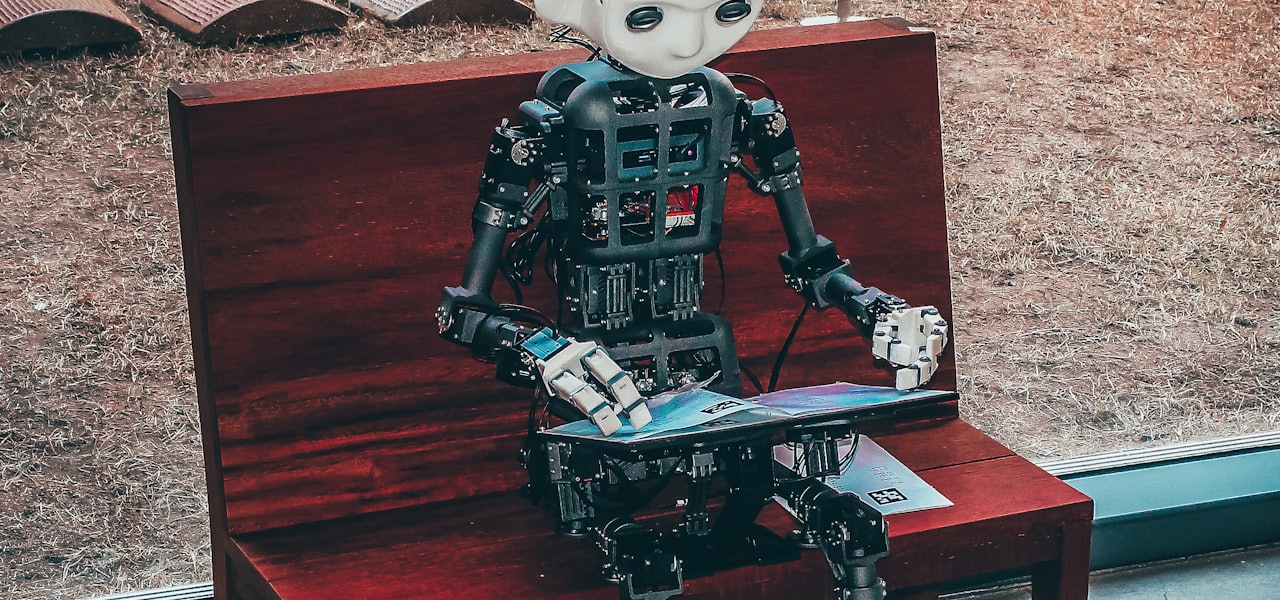
    Robotics is the interdisciplinary study and practice of the design, construction, operation, and use of robots. A roboticist is someone who specializes in robotics. Robotics usually combines four aspects of design work: a power source (e.g. a battery), mechanical construction, a control system (electrical circuits), and software (run by remote control or artificial intelligence). The goal of most robotics is to design machines that can assist humans in various fields, such as agriculture, construction, domestic work, food processing, inventory management, manufacturing, medicine, military, mining, space exploration, and transportation. Robots impact humans by displacing workers. Some expect this to occur at an increasing rate, leading to proposed solutions such as basic income. Robotics is itself a lucrative business that creates careers, especially for postgraduates. Roboticists often aim to create machines that seem to interface naturally with humans. The field is under active research and development, with areas of interest including robot kinematics and quantum robotics. == Design == Robotics usually combines four aspects of design work to create a robot: Power source: Potential energy sources include wired electricity, a battery, and/or petrol. Mechanical construction: A physical form or combination of forms is designed to functionally achieve tasks within a given range of environments. This can include locomotive elements such as wheels and caterpillar tracks, as well as hydraulic limbs and manipulators (e.g. hands). Control system: Electrical circuits (utilizing components such as diodes and transistors) are used to run software, govern motor movement, and read sensors. Software: A program is how a robot decides when or how to do something. Robotic programs can be run by remote control, artificial intelligence (AI), or a hybrid of the two. AI programming is an important part of robotic navigation and human–robot interaction. === Power source === Many different types of batteries can be used as a power source. Most are lead–acid batteries, which are safe and have relatively long shelf lives but are rather heavy compared to silver–cadmium batteries, which are much smaller in volume and much more expensive. Designing a battery-powered robot needs to take into account factors such as safety, cycle lifetime, and weight. Generators, often some type of internal combustion engine, can also be used, but are often mechanically complex and inefficient. Additionally, a tether could connect the robot to a power supply, saving weight and space, but requiring a cumbersome cable. Potential power sources include: Flywheel energy storage Hydraulics Nuclear Organic garbage (through anaerobic digestion) Pneumatics (compressed gases) Solar power === Mechanical construction === Actuators are the "muscles" of a robot, the parts which convert stored energy into movement. The most popular actuators are electric motors that rotate a wheel or gear and linear actuators that control factory robots. Most robots use electric motors—often brushed and brushless DC motors in portable robots or AC motors in industrial robots and computer numerical control machines—especially in systems with lighter loads and where the predominant form of motion is rotational. Meanwhile, linear actuators move in and out and often have quicker direction changes, particularly when large forces are needed, such as with industrial robotics. They are typically powered by oil or compressed air, but can also be powered by electricity, usually via a motor and a leadscrew. The mechanical rack and pinion is common. Recent alternatives to DC motors are piezoelectric motors, including ultrasonic motors, in which tiny piezoceramic elements vibrate many thousands of times per second, causing linear or rotary motion. One type uses the vibration of the piezo elements to step the motor in a circle or a straight line; another type uses the piezo elements to vibrate a nut or drive a screw. The advantages of these motors are nanometer resolution, speed, and force for their size. Series elastic actuation (SEA) relies on introducing intentional elasticity between the motor actuator and the load for robust force control. Due to the resultant lower reflected inertia, series elastic actuation improves safety during robot interactions or collisions. Further, it provides energy efficiency and shock absorption (mechanical filtering) while reducing excessive wear on the transmission and other components. This approach has successfully been employed in various robots, particularly advanced manufacturing robots and walking humanoid robots. The controller design of a series elastic actuator is most often performed within the passivity framework as it ensures the safety of interaction with unstructured environments. However, this framework suffers from stringent limitations imposed on the controller, which may impact performance. Pneumatic artificial muscles, also known as air muscles, are special tubes that expand (typically up to 42%) when air is forced inside them; they are used in some robot applications. Muscle wire, also known as shape memory alloy, is a material that contracts (under 5%) when electricity is applied; they have been used for some small robots. Electroactive polymers are a plastic material that can contract substantially (up to 380% activation strain) from electricity and have been used in the facial muscles and arms of humanoid robots, as well as to enable new robots to float, fly, swim or walk. Additionally, elastic carbon nanotubes are a promising experimental artificial muscle technology. The absence of defects in carbon nanotubes enables these filaments to deform elastically by several percent, with energy storage levels of perhaps 10 J/cm3 for metal nanotubes. Human biceps could be replaced with wire of this material measuring 8 millimetres (3⁄8 in) in diameter, feasibly allowing future robots to outperform humans. ==== Locomotion ==== Robots with only one or two wheel(s) can have advantages such as greater efficiency, reduced parts, and navigation through confined areas. A one-wheeled robot balances on a round ball; Carnegie Mellon University's Ballbot is the approximate height and width of a person. Several attempts have also been made to build spherical robots (also known as orb bots or ball bots), which move by spinning a weight inside the ball or rotating outer shells. Two-wheeled balancing robots generally use a gyroscope to detect how much a robot is falling and drive the wheels proportionally up to hundreds of times per second to counterbalance the fall, based on inverted pendulum dynamics. NASA's Robonaut has been mounted to a Segway for a similar effect. Most mobile robots have four wheels or continuous tracks. Six wheels can give better traction in outdoor terrain, while tracks provide even more grip. Tracked wheels are common for outdoor off-road robots, but are difficult to use indoors. A small number of skating robots have been developed, one of which is a multimodal walking and skating device with four legs and unpowered wheels. Several robots have been made that can walk on two legs, but not yet as reliably as a human. Many other robots have been built that walk on more than two legs, being significantly easier. Walking robots could be used for uneven terrains, providing a high degree of mobility and efficiency, but two-legged robots can currently only handle flat floors or perhaps stairs. Some approaches have included: The zero moment point (ZMP) is the algorithm used by robots such as Honda's ASIMO. The robot's onboard computer tries to keep the total inertial forces (the combination of Earth's gravity and the acceleration and deceleration of walking) exactly opposed by the floor reaction force (the force of the floor pushing back on the robot's foot). In this way, the two forces cancel out, leaving no moment (force causing the robot to rotate and fall over). Human observers note that this is not exactly how a human walks, with some describing ASIMO's walk as looking like it needs use the bathroom. ASIMO's walking algorithm utilizes some dynamic balancing, but requires a flat surface. Several robots, built in the 1980s by Marc Raibert at the MIT Leg Laboratory, successfully demonstrated very dynamic walking. Initially, a robot with only one leg, and a very small foot could stay upright simply by hopping. The movement is the same as that of a person on a pogo stick. As the robot falls to one side, it would jump slightly in that direction to catch itself. Soon, the algorithm was generalized to two and four legs. A bipedal robot was demonstrated running and even performing somersaults. A quadruped was also demonstrated which could trot, run, pace, and bound. A more advanced approach is a dynamic balancing algorithm, which constantly monitors the robot's motion and places the feet to maintain stability. This technique has been demonstrated by Anybots' Dexter robot (

    Read more →
  • Medical imaging

    Medical imaging

    Medical imaging is the technique and process of imaging the interior of a body for clinical analysis and medical intervention, as well as visual representation of the function of some organs or tissues (physiology). Medical imaging seeks to reveal internal structures hidden by the skin and bones, as well as to diagnose and treat disease. Medical imaging also establishes a database of normal anatomy and physiology to make it possible to identify abnormalities. Although imaging of removed organs and tissues can be performed for medical reasons, such procedures are usually considered part of pathology instead of medical imaging. Measurement and recording techniques that are not primarily designed to produce images, such as electroencephalography (EEG), magnetoencephalography (MEG), electrocardiography (ECG), and others, represent other technologies that produce data susceptible to representation as a parameter graph versus time or maps that contain data about the measurement locations. In a limited comparison, these technologies can be considered forms of medical imaging in another discipline of medical instrumentation. As of 2010, 5 billion medical imaging studies had been conducted worldwide. Radiation exposure from medical imaging in 2006 made up about 50% of total ionizing radiation exposure in the United States. Medical imaging equipment is manufactured using technology from the semiconductor industry, including CMOS integrated circuit chips, power semiconductor devices, sensors such as image sensors (particularly CMOS sensors) and biosensors, and processors such as microcontrollers, microprocessors, digital signal processors, media processors and system-on-chip devices. As of 2015, annual shipments of medical imaging chips amount to 46 million units and $1.1 billion. The term "noninvasive" is used to denote a procedure where no instrument is introduced into a patient's body, which is the case for most imaging techniques used. == History == In 1972, engineer Godfrey Hounsfield from the British company EMI invented the X-ray computed tomography device for head diagnosis, which is commonly referred to as computed tomography (CT). The CT nucleus method is based on the projecting X-rays through a section of the human head, which are then processed by computer to reconstruct the cross-sectional image, known as image reconstruction. In 1975, EMI successfully developed a CT device for the entire body, enabling the clear acquisition of tomographic images of various parts of the human body. This revolutionary diagnostic technique earned Hounsfield and physicist Allan Cormack the Nobel Prize in Physiology or Medicine in 1979. Digital image processing technology for medical applications was inducted into the Space Foundation's Space Technology Hall of Fame in 1994. By 2010, over 5 billion medical imaging studies had been conducted worldwide. Radiation exposure from medical imaging in 2006 accounted for about 50% of total ionizing radiation exposure in the United States. Medical imaging equipment is manufactured using technology from the semiconductor industry, including CMOS integrated circuit chips, power semiconductor devices, sensors such as image sensors (particularly CMOS sensors) and biosensors, as well as processors like microcontrollers, microprocessors, digital signal processors, media processors and system-on-chip devices. As of 2015, annual shipments of medical imaging chips reached 46 million units, generating a market value of $1.1 billion. == Types == In the clinical context, "invisible light" medical imaging is generally equated to radiology or "clinical imaging". "Visible light" medical imaging involves digital video or still pictures that can be seen without special equipment. Dermatology and wound care are two modalities that use visible light imagery. Interpretation of medical images is generally undertaken by a physician specialising in radiology known as a radiologist; however, this may be undertaken by any healthcare professional who is trained and certified in radiological clinical evaluation. Increasingly interpretation is being undertaken by non-physicians, for example radiographers frequently train in interpretation as part of expanded practice. Diagnostic radiography designates the technical aspects of medical imaging and in particular the acquisition of medical images. The radiographer (also known as a radiologic technologist) is usually responsible for acquiring medical images of diagnostic quality; although other professionals may train in this area, notably some radiological interventions performed by radiologists are done so without a radiographer. As a field of scientific investigation, medical imaging constitutes a sub-discipline of biomedical engineering, medical physics or medicine depending on the context: Research and development in the area of instrumentation, image acquisition (e.g., radiography), modeling and quantification are usually the preserve of biomedical engineering, medical physics, and computer science; Research into the application and interpretation of medical images is usually the preserve of radiology and the medical sub-discipline relevant to medical condition or area of medical science (neuroscience, cardiology, psychiatry, psychology, etc.) under investigation. Many of the techniques developed for medical imaging also have scientific and industrial applications. === Radiography === Two forms of radiographic images are in use in medical imaging. Projection radiography and fluoroscopy, with the latter being useful for catheter guidance. These 2D techniques are still in wide use despite the advance of 3D tomography due to the low cost, high resolution, and depending on the application, lower radiation dosages with 2D technique. This imaging modality uses a wide beam of X-rays for image acquisition and is the first imaging technique available in modern medicine. Fluoroscopy produces real-time images of internal structures of the body in a similar fashion to radiography, but employs a constant input of X-rays, at a lower dose rate. Contrast media, such as barium, iodine, and air are used to visualize internal organs as they work. Fluoroscopy is also used in image-guided procedures when constant feedback during a procedure is required. An image receptor is required to convert the radiation into an image after it has passed through the area of interest. Early on, this was a fluorescing screen, which gave way to an Image Amplifier (IA) which was a large vacuum tube that had the receiving end coated with cesium iodide, and a mirror at the opposite end. Eventually the mirror was replaced with a TV camera. Projectional radiographs, more commonly known as X-rays, are often used to determine the type and extent of a fracture as well as for detecting pathological changes in the lungs. With the use of radio-opaque contrast media, such as barium, they can also be used to visualize the structure of the stomach and intestines – this can help diagnose ulcers or certain types of colon cancer. === Magnetic resonance imaging === A magnetic resonance imaging instrument (MRI scanner), or "nuclear magnetic resonance (NMR) imaging" scanner as it was originally known, uses powerful magnets to polarize and excite hydrogen nuclei (i.e., single protons) of water molecules in human tissue, producing a detectable signal that is spatially encoded, resulting in images of the body. The MRI machine emits a radio frequency (RF) pulse at the resonant frequency of the hydrogen atoms on water molecules. Radio frequency antennas ("RF coils") send the pulse to the area of the body to be examined. The RF pulse is absorbed by protons, causing their direction with respect to the primary magnetic field to change. When the RF pulse is turned off, the protons "relax" back to alignment with the primary magnet and emit radio waves in the process. This radio-frequency emission from the hydrogen atoms on water is what is detected and reconstructed into an image. The resonant frequency of a spinning magnetic dipole (of which protons are one example) is called the Larmor frequency and is determined by the strength of the main magnetic field and the chemical environment of the nuclei of interest. MRI uses three electromagnetic fields: a very strong (typically 1.5 to 3 teslas) static magnetic field to polarize the hydrogen nuclei, called the primary field; gradient fields that can be modified to vary in space and time (on the order of 1 kHz) for spatial encoding, often simply called gradients; and a spatially homogeneous radio-frequency (RF) field for manipulation of the hydrogen nuclei to produce measurable signals, collected through an RF antenna. Like CT, MRI traditionally creates a two-dimensional image of a thin "slice" of the body and is therefore considered a tomographic imaging technique. Modern MRI instruments are capable of producing images in the form of 3D blocks, which may be considered a generalization of the single-slice

    Read more →
  • Likewise, Inc.

    Likewise, Inc.

    Likewise, Inc., is an American technology startup company which provides a social networking service for finding and saving content recommendations for movies, TV shows, books, and podcasts. A team of ex-Microsoft employees founded Likewise in October 2017 with financial investment from Microsoft co-founder Bill Gates. The company is led by CEO Ian Morris and as of 2020 had a team of about 35 employees. Its headquarters operates in Bellevue, Washington. As of July 2020, 1 million users had joined the platform. == History == === Ideation (October 2017) === In 2017, former Microsoft Communications Chief Larry Cohen came up with the idea for Likewise in Bill Gates’ private office, Gates Ventures. Cohen currently serves as Gates Ventures’ CEO and managing partner. Cohen collaborated with colleagues Michael Dix and Ian Morris to co-found what would become Likewise, with Morris as its CEO. Gates funded the company's early development. The company developed its platform in stealth mode before launching publicly in October 2018. === Release (October 2018) === Likewise officially released its platform in the US and Canada on October 3, 2018. === Growth (2020 COVID-19 pandemic) === Likewise experienced accelerated growth alongside the COVID-19 pandemic. From March 2020 to July 2020, the platform's monthly active users tripled in numbers. The company reached one million users in July 2020. == Applications == === Mobile === Likewise is available as a mobile app for the Android and iOS mobile operating systems. Users receive recommendations from the Likewise algorithm, people they follow, and the Likewise editorial team. === Likewise TV === In October 2019, the company launched its Apple TV app called Likewise TV. The television app organizes shows across streaming services under one watchlist. On July 20, 2020, Likewise TV expanded to Android TV and Amazon Fire TV users.

    Read more →
  • Amira (software)

    Amira (software)

    Amira (ah-MEER-ah) is a software platform for visualization, processing, and analysis of 3D and 4D data. It is being actively developed by Thermo Fisher Scientific in collaboration with the Zuse Institute Berlin (ZIB), and commercially distributed by Thermo Fisher Scientific — together with its sister software Avizo. == Overview == Amira is an extendable software system for scientific visualization, data analysis, and presentation of 3D and 4D data. It is used by researchers and engineers in academia and industry. It is a tool for processing, analysis and visualization of data from various modalities; e.g. micro-CT, PET, Ultrasound. It is used in many fields, such as microscopy in biology and materials science, molecular biology, quantum physics, astrophysics, computational fluid dynamics (CFD), finite element modeling (FEM), non-destructive testing (NDT), and many more. One of the key features, besides data visualization, is Amira's set of tools for image segmentation and geometry reconstruction. This allows the user to mark (or segment) structures and regions of interest in 3D image volumes using automatic, semi-automatic, and manual tools. The segmentation can then be used for a variety of subsequent tasks, such as volumetric analysis, density analysis, shape analysis, or the generation of 3D computer models for visualization, numerical simulations, or rapid prototyping or 3D printing. Other key Amira features are multi-planar and volume visualization, image registration, filament tracing, cell separation and analysis, tetrahedral mesh generation, fiber-tracking from diffusion tensor imaging (DTI) data, skeletonization, spatial graph analysis, and stereoscopic rendering of 3D data over multiple displays and immersive virtual reality environments, including CAVEs. As a commercial product Amira requires the purchase of a license or an academic subscription. A time-limited, but full-featured evaluation version is available for download free of charge. == History == === 1993–1998: Research software === Amira's roots go back to 1993 and the Department for Scientific Visualization, headed by Hans-Christian Hege at the Zuse Institute Berlin (ZIB). The ZIB is a research institute for mathematics and informatics. The Scientific Visualization department's mission is to help solve computationally and scientifically challenging tasks in medicine, biology, engineering and materials science. For this purpose, it develops algorithms and software for 2D, 3D, and 4D data visualization and visually supported exploration and analysis. At that time, the young visualization group at the ZIB had experience with the extendable, data flow-oriented visualization environments apE, IRIS Explorer, and Advanced Visualization Studio (AVS), but was not satisfied with these products' interactivity, flexibility, and ease-of-use for non-computer scientists. Therefore, the development of a new software system was started in a research project within a medically oriented, multi-disciplinary collaborative research center. Based on experiences that Tobias Höllerer had gained in late 1993 with the new graphics library IRIS Inventor, it was decided to utilize that library. The development of the medical planning system was performed by Detlev Stalling, who later became the chief software architect of Amira. The new software was called "HyperPlan", highlighting its initial target application – a planning system for hyperthermia cancer treatment. The system was being developed on Silicon Graphics (SGI) computers, which at the time were the standard workstations used for high-end graphics computing. The software was based on libraries such as OpenGL (originally IRIS GL), Open Inventor (originally IRIS Inventor), and the graphical user interface libraries X11, Motif (software), and ViewKit. In 1998, X11/Motif/Viewkit were replaced by the Qt toolkit. The HyperPlan framework served as the base for more and more projects at the ZIB and was used by a growing number of researchers in collaborating institutions. The projects included applications in medical image computing, medical visualization, neurobiology, confocal microscopy, flow visualization, molecular analytics and computational astrophysics. === 1998–today: Commercially supported product === The growing number of users of the system started to exceed the capacities that ZIB could spare for software distribution and support, as ZIB's primary mission was algorithmic research. Therefore, the spin-off company Indeed – Visual Concepts GmbH was founded by Hans-Christian Hege, Detlev Stalling, and Malte Westerhoff. In Feb 1998 the HyperPlan software was given the new, application-neutral name "Amira". This name is not an acronym, but was chosen for being pronounceable in different languages and providing a suitable connotation, namely "to look at" or "to wonder at", from the Latin verb "admirare" (to admire), which reflects a basic situation in data visualization. A major re-design of the software was undertaken by Detlev Stalling and Malte Westerhoff in order to make it a commercially supportable product and to make it available on non-SGI computers as well. In March 1999, the first version of the commercial Amira was exhibited at the CeBIT tradeshow in Hannover, Germany on SGI IRIX and Hewlett-Packard UniX (HP-UX) booths. Versions for Linux and Microsoft Windows followed within the following twelve months. Later Mac OS X support was added. Indeed – Visual Concepts GmbH selected the Bordeaux, France and San Diego, United States based company TGS, Inc. as the worldwide distributor for Amira and completed five major releases (up to version 3.1) in the subsequent four years. In 2003 both Indeed – Visual Concepts GmbH, as well as TGS, Inc. were acquired by Massachusetts-based Mercury Computer Systems, Inc. (NASDAQ:MRCY) and became part of Mercury's newly formed life sciences business unit, later branded Visage Imaging. In 2009, Mercury Computer Systems, Inc. spun off Visage Imaging again and sold it to Melbourne, Australia based Promedicus Ltd (ASX:PME), a leading provider of radiology information systems and medical IT solutions. During this time, Amira continued to be developed in Berlin, Germany and in close collaboration with the ZIB, still headed by the original creators of Amira. TGS, located in Bordeaux, France was sold by Mercury Computer systems to a French investor and renamed to Visualization Sciences Group (VSG). VSG continued the work on a complementary product named Avizo, based on the same source code but customized for material sciences. In August 2012, FEI, to that date the largest OEM reseller of Amira, purchased VSG and the Amira business from Promedicus. This brought the two software sisters Amira and Avizo back into one hand. In August 2013, Visualization Sciences Group (VSG) became a business unit of FEI. In 2016 FEI has been bought by Thermo Fisher Scientific and became part of its Materials & Structural Analysis division in early 2017. Amira and Avizo are still being marketed as two different products; Amira for life sciences and Avizo for materials science, but the development efforts are now joined once again. In the meantime, the number of scientific articles using the Amira / Avizo software, is in the order of 10 thousands. == Amira options == === Microscopy option === Specific readers for microscopy data Image deconvolution Exploration of 3D imagery obtained from virtually any microscope Extraction and editing of filament networks from microscopy images === DICOM reader === Import of clinical and preclinical data in DICOM format === Mesh option === Generation of 3D finite element (FE) meshes from segmented image data Support for many state-of-the-art FE solver formats High-quality visualization of simulation mesh-based results, using scalar, vector, and tensor field display modules === Skeletonization option === Reconstruction and analysis of neural and vascular networks Visualization of skeletonized networks Length and diameter quantification of network segments Ordering of segments in a tree graph Skeletonization of very large image stacks === Molecular option === Advanced tools for the visualization of molecule models Hardware-accelerated volume rendering Powerful molecule editor Specific tools for complex molecular visualization === Developer option === Creation of new custom components for visualizing or data processing Implementation of new file readers or writers C++ programming language Development wizard for getting started quickly === Neuro option === Medical image analysis for DTI and brain perfusion Fiber tracking supporting several stream-line based algorithms Fiber separation into fiber bundles based on user defined source and destination regions Computation of tensor fields, diffusion weighted maps Eigenvalue decomposition of tensor fields Computation of mean transit time, cerebral blood flow, and cerebral blood volume === VR option === Visualization of data on large tiled displays

    Read more →
  • ARD Sounds

    ARD Sounds

    ARD Sounds (until March 2026: ARD Audiothek) is the joint audio portal of the state broadcasting stations of the ARD and Deutschlandradio on the Internet. The service was officially launched as a mobile app on November 8, 2017, on the occasion of the ARD Radio Play Days in Karlsruhe. A beta web version has also been available since November 2018; it replaces the radio features in the ARD Mediathek, which has since offered only video content. Editorial support for the ARD Audiothek is provided by the ARD, the online editorial team in Mainz. In April 2018, the ARD Audiothek won the German Digital Award in silver in the category "Mobile Apps - User Experience / Usability". Within a year, the mobile app version had been installed more than 510,000 times and had around 21 million audio views. The Android app recorded more than 100,000 downloads in October 2019, according to the Google Play Store.

    Read more →
  • Blobotics

    Blobotics

    Blobotics is a term describing research into chemical-based computer processors based on ions rather than electrons. Andrew Adamatzky, a computer scientist at the University of the West of England, Bristol used the term in an article in New Scientist March 28, 2005 [1]. The aim is to create 'liquid logic gates' which would be 'infinitely reconfigurable and self-healing'. The process relies on the Belousov–Zhabotinsky reaction, a repeating cycle of three separate sets of reactions. Such a processor could form the basis of a robot which, using artificial sensors, interact with its surroundings in a way which mimics living creatures. The coining of the term was featured by ABC radio in Australia [2].

    Read more →
  • List of artificial intelligence journals

    List of artificial intelligence journals

    This is a list of notable peer-reviewed academic journals that publish research in the field of artificial intelligence (AI), including areas such as machine learning, computer vision, natural language processing, robotics, and intelligent systems. == General artificial intelligence == Artificial Intelligence (journal) – Elsevier Journal of Artificial Intelligence Research (JAIR) – AI Access Foundation Knowledge-Based Systems – Elsevier == Machine learning == Data Mining and Knowledge Discovery – Springer Machine Learning (journal) – Springer Journal of Machine Learning Research – Microtome Pattern Recognition (journal) – Elsevier Neural Networks (journal) – Elsevier Neural Computation (journal) – MIT Press Neurocomputing (journal) - Elsevier == Deep learning and neural computation == IEEE Transactions on Evolutionary Computation – IEEE IEEE Transactions on Neural Networks and Learning Systems – IEEE Nature Machine Intelligence – Springer Nature == Computer vision == International Journal of Computer Vision – Springer IEEE Transactions on Pattern Analysis and Machine Intelligence – IEEE Machine Vision and Applications – Springer == Natural language processing == Computational Linguistics (journal) – MIT Press Natural Language Processing Transactions of the Association for Computational Linguistics – ACL == Robotics and intelligent systems == IEEE Transactions on Robotics – IEEE Autonomous Robots – Springer Journal of Intelligent & Robotic Systems – Springer == Interdisciplinary and ethics in AI == AI & Society – Springer Artificial Life – MIT Press Philosophy & Technology – Springer Minds and Machines – Springer

    Read more →
  • BBC Own It

    BBC Own It

    The BBC Own It app was a British information site designed to protect and support children using the Internet. The app was launched in 2017 and retired in 2022, though the website retired in 2024 and has since moved to BBC Teach. As part of the BBC's partnership with Internet Matters, the not-for-profit contributed to content on the BBC Own It website. == History == In 2016, The Royal Foundation of The Duke and Duchess of Cambridge established The Royal Foundation Taskforce on the Prevention of Cyberbullying. Work began in 2017 by the BBC to create an app about cyberbullying and online safety (later titled Own It) in response to a call for action from the Taskforce. In December 2017, the BBC launched Own It. In November 2018, work on the BBC Own It App was announced by Prince William. In September 2019, the BBC Own It App was launched into the AppStore and Google Play. In 2022, the BBC discontinued the app, although the website was still active, however in 2024, the website was discontinued, and now any links to the website now redirect to a BBC Teach page. == Awards == UXUK award for Best Education or Learning Experience (2019) Banff World Media Festival Rockies Award for Children & Youth Interactive Content (2020) CogX Award for Best Innovation In Natural Language Processing (2020)

    Read more →
  • Glossary of robotics

    Glossary of robotics

    Robotics is the branch of technology that deals with the design, construction, operation, structural disposition, manufacture and application of robots. Robotics is related to the sciences of electronics, engineering, mechanics, and software. The following is a list of common definitions related to the Robotics field. == A == Actuator: a motor that translates control signals into mechanical movement. The control signals are usually electrical but may, more rarely, be pneumatic or hydraulic. The power supply may likewise be any of these. It is common for electrical control to be used to modulate a high-power pneumatic or hydraulic motor. Aerobot: a robot capable of independent flight on other planets. A type of aerial robot. Arduino: The current platform of choice for small-scale robotic experimentation and physical computing. Artificial intelligence: is the intelligence of machines and the branch of computer science that aims to create it. Aura (satellite): a robotic spacecraft launched by NASA in 2004 which collects atmospheric data from Earth. Automaton: an early self-operating robot, performing exactly the same actions, over and over. Autonomous vehicle: a vehicle equipped with an autopilot system, which is capable of driving from one point to another without input from a human operator. == B == Biomimetic: See Bionics. Bionics: also known as biomimetics, biognosis, biomimicry, or bionical creativity engineering is the application of biological methods and systems found in nature to the study and design of engineering systems and modern technology. == C == CAD/CAM (computer-aided design and computer-aided manufacturing): These systems and their data may be integrated into robotic operations. Čapek, Karel: Czech author who coined the term 'robot' in his 1921 play, Rossum's Universal Robots. Chandra X-ray Observatory: a robotic spacecraft launched by NASA in 1999 to collect astronomical data. Cloud robotics: robots empowered with more capacity and intelligence from cloud. Combat, robot: a hobby or sport event where two or more robots fight in an arena to disable each other. This has developed from a hobby in the 1990s to several TV series worldwide. Cruise missile: a robot-controlled guided missile that carries an explosive payload. Cyborg: also known as a cybernetic organism, a being with both biological and artificial (e.g. electronic, mechanical or robotic) parts. == D == Degrees of freedom: the extent to which a robot can move itself; expressed in terms of Cartesian coordinates (x, y, and z) and angular movements (yaw, pitch, and roll). Delta robot: a tripod linkage, used to construct fast-acting manipulators with a wide range of movement. Drive Power: The energy source or sources for the robot actuators. == E == Emergent behaviour, a complicated resultant behaviour that emerges from the repeated operation of simple underlying behaviours. Envelope (Space), Maximum The volume of space encompassing the maximum designed movements of all robot parts including the end-effector, workpiece, and attachments. Explosive ordnance disposal robot A mobile robot designed to assess whether an object contains explosives; some carry detonators that can be deposited at the object and activated after the robot withdraws. == F == FIRST(For Inspiration and Recognition of Science and Technology): an organization founded by inventor Dean Kamen in 1989 in order to develop ways to inspire students in engineering and technology fields. Forward chaining: a process in which events or received data are considered by an entity to intelligently adapt its behavior. == G == Gynoid: A humanoid robot designed to look like a human female. == H == Haptic: tactile feedback technology using the operator's sense of touch. Also sometimes applied to robot manipulators with their own touch sensitivity. Hexapod (platform): A movable platform using six linear actuators. Often used in flight simulators and fairground rides, they also have applications as a robotic manipulator. Hexapod (walker): A six-legged walking robot, using a simple insect-like locomotion. Human–computer interaction. Humanoid: A robotic entity designed to resemble a human being in form, function, or both. Hydraulics: the control of mechanical force and movement, generated by the application of liquid under pressure. cf. pneumatics. == I == Industrial robot: A reprogrammable, multifunctional manipulator designed to move material, parts, tools, or specialized devices through variable programmed motions for the performance of a variety of tasks. Insect robot: A small robot designed to imitate insect behaviors rather than complex human behaviors. == K == Kalman filter: a mathematical technique to estimate the value of a sensor measurement, from a series of intermittent and noisy values. Kinematics: the study of motion, as applied to robots. This includes both the design of linkages to perform motion, their power, control and stability; also their planning, such as choosing a sequence of movements to achieve a broader task. Inverse Kinematics: the process of determining joint angles required for a robot's end-effector to reach a desired position and orientation in space. Used in motion planning to calculate motor commands from target positions. == L == Linear actuator A form of motor that generates a linear movement directly. == M == Manipulator or gripper: A robotic 'hand'. Mobile robot: A self-propelled and self-contained robot that is capable of moving over a mechanically unconstrained course. Muting: The deactivation of a presence-sensing safeguarding device during a portion of the robot cycle. Mecanum wheel: A wheel fitted with angled rollers that enables a robot vehicle to move in multiple directions, including sideways. == O == Ornithopter – An aerial robot or drone that achieves flight through a flapping-wing mechanism rather than rotating blades or fixed wings, often utilized for highly maneuverable flight. == P == Parallel manipulator: an articulated robot or manipulator based on a number of kinematic chains, actuators and joints, in parallel. cf. serial manipulator. Pendant: Any portable control device that permits an operator to control the robot from within the restricted envelope (space) of the robot. Pneumatics: the control of mechanical force and movement, generated by the application of compressed gas. cf. hydraulics. Powered exoskeleton: is a wearable mobile machine that allow for limb movement with increased strength and endurance. Prosthetic robots: programmable manipulators or devices for missing human limbs. == R == Remote manipulator: A manipulator under direct human control, often used for work with hazardous materials. Robonaut: a development project conducted by NASA to create humanoid robots capable of using space tools and working in similar environments to suited astronauts. == S == Sensor fusion:The process of combining data from multiple sensors, such as LiDAR, cameras, global positioning systems (GPS), and inertial measurement units (IMUs), to produce a more accurate and reliable understanding of an environment than using a single sensor alone. It is widely used in robotics and autonomous systems to improve perception, localization, and decision-making. Serial manipulator: an articulated robot or manipulator with a single series kinematic chain of actuators. cf. parallel manipulator. Service robots are machines that extend human capabilities. Servo, a motor that moves to and maintains a set position under command, rather than continuously moving. Servomechanism An automatic device that uses error-sensing negative feedback to correct the performance of a mechanism. Single Point of Control The ability to operate the robot such that initiation or robot motion from one source of control is possible only from that source and cannot be overridden from another source. Slow Speed Control A mode of robot motion control where the velocity of the robot is limited to allow persons sufficient time either to withdraw the hazardous motion or stop the robot. Snake robot A robot component resembling a tentacle or elephant's trunk, where many small actuators are used to allow continuous curved motion of a robot component, with many degrees of freedom. This is usually applied to snake-arm robots, which use this as a flexible manipulator. A rarer application is the snakebot, where the entire robot is mobile and snake-like, so as to gain access through narrow spaces. Stepper motor Stewart platform A movable platform using six linear actuators, hence also known as a Hexapod. Subsumption architecture A robot architecture that uses a modular, bottom-up design beginning with the least complex behavioral tasks. Surgical robot, a remote manipulator used for keyhole surgery Swarm robotics involve large numbers of mostly simple physical robots. Their actions may seek to incorporate emergent behavior observed in social insects (swarm intelligence). Synchro == T == Teach Mode: The control state that al

    Read more →